Your cart is empty
You may check out all the available products and buy some in the shop
Return to shop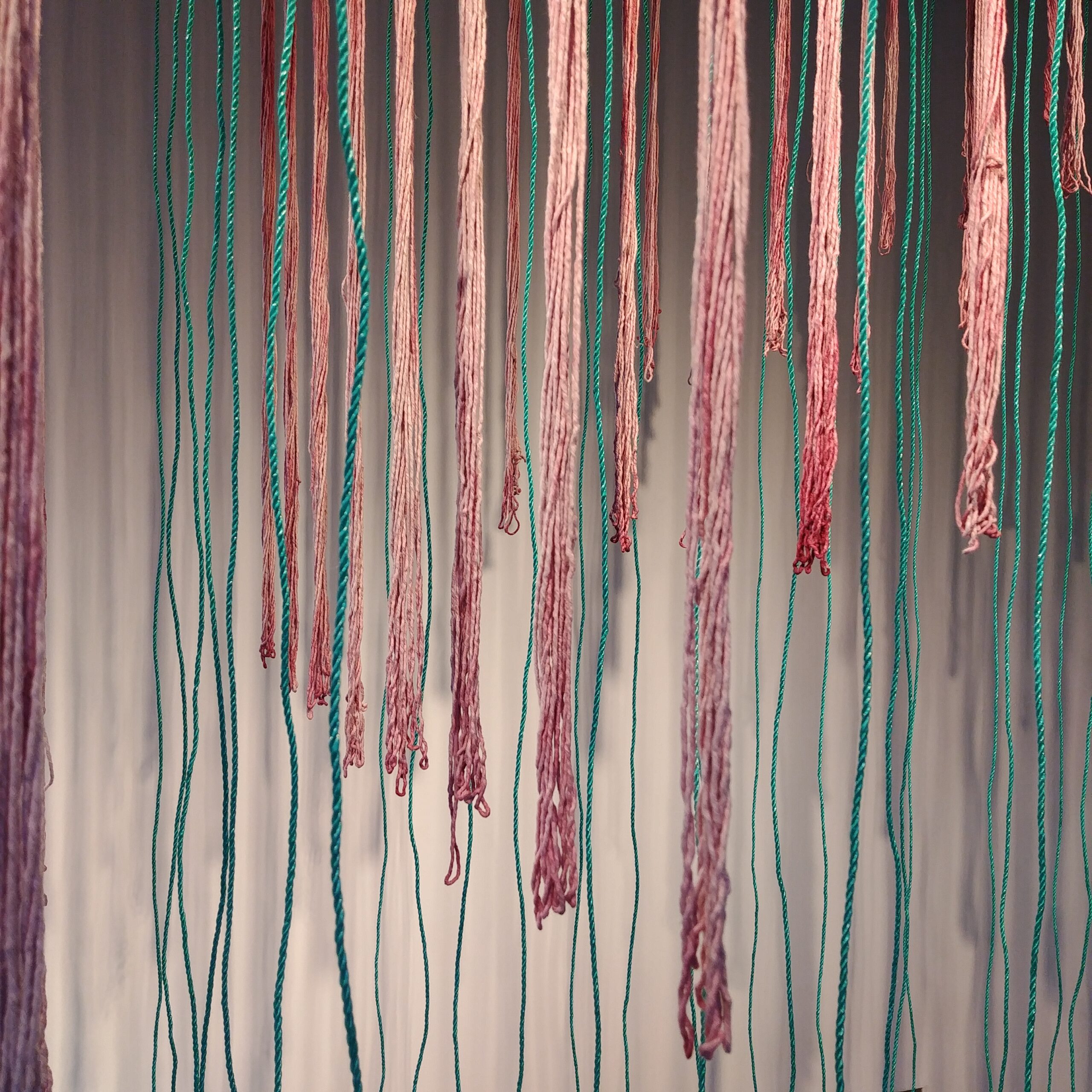
The interaction of two opposing materials makes the difference in their manufacture, composition, decomposition and use evident. The color of the hibiscus, the texture of the hemp and the irregularity of the dyeing are processes, materials and techniques that generate and evolve an irreproducible artisanal knowledge. The counterpart, the plastic cord, represents an increasingly dependent world. A standardized,
Manufacturing
This installation was fabricated in one week, as part of a workshop given to high school students applying to the Savannah College of Art and Design (SCAD) in Piegatto.
During the manufacturing process, the materials selected for the project were braided Guatemalan hemp, hibiscus flower for natural hemp dyeing, and green nylon cord.
The natural dyeing was done for three consecutive days, using 2 km of hemp yarn. The process involved boiling the hibiscus and extracting its ink, dyeing clumps of yarn until the full length was complete. The three-dimensionality of the installation was achieved by digital fabrication to obtain the exact lengths. All threads and cords are suspended with metal hooks and alternate between position and material.
Workshop
The workshop with the students and the relationship with the installation were based on their introduction to natural dyeing and the process of obtaining natural dyes. During the workshop, the process of extracting the dye, specifically that of hibiscus, was explained. Each student had to dye their own 3-meter-long hemp yarn, to have their own dyed material.
Other dyes and natural pigment extraction processes were also demonstrated, specifically with turmeric, paprika, charcoal and spinach, mixing them with water or egg yolk to create natural tempera.
Finally, the objective of the workshop and the installation was achieved: to encourage students who aspire to enter creative universities of art and design the tangible process of creating with their own hands.